My research, conducted among 28 experienced Scrum Masters and Agile Coaches in Poland shows that creativity in agile software teams is rarely the direct result of isolated interventions. Instead, creativity tends to emerge as a by-product of everyday facilitation work of Scrum Masters and Agile Coaches, through which they create a fertile space that allows creativity to emerge spontaneously, even when it is not their explicit goal.
People in these organizational roles, most often employed in the development of digital products, engage in project work, in which the project itself is divided into smaller sections to test and develop the product in teams. The spaces they create, which I refer to as generative spaces, are understood as socio-material systems of work that foster creativity. I show this space as a dissipative structure – a structure that requires a continuous influx of energy to be sustained – and portray Scrum Masters and Agile Coaches as its architects.
Agile teams do not operate in a vacuum. Whether a team acts creatively to a large extent depends on the degree to which it has real influence over the work process, how tasks are carried out, and the product being developed. Teams granted sufficient decision-making freedom are more likely to engage in creative exploration and generate fresh, useful ideas focused on both the development process and the product being developed. This creative freedom is largely shaped by the organization and by the Product Owner, responsible for the product from the business side.
Respondents interviewed for this study describe their teams as operating under restrictive conditions, marked by rigid expectations, process-related constraints, and solutions imposed from above. Under such conditions, software teams gradually withdraw from creative engagement and reduce their role to executing predefined instructions, becoming passive implementers. Interviewees sum it up as being “just coders.”
At the same time, the study shows that Scrum Masters and Agile Coaches often attempt to loosen these constraints and broaden their creative freedom in the organization. In practice, this involves bolstering team empowerment, negotiating resources as well as time and space for experimentation, explaining the principles underlying agile ways of working to managers, increasing transparency around problems that may emerge, and building the organization’s trust in the team’s capabilities. In doing so, Scrum Masters and Agile Coaches educate decision-makers that creativity is a complex, non-linear thought process requiring patience, time, and sustained effort.
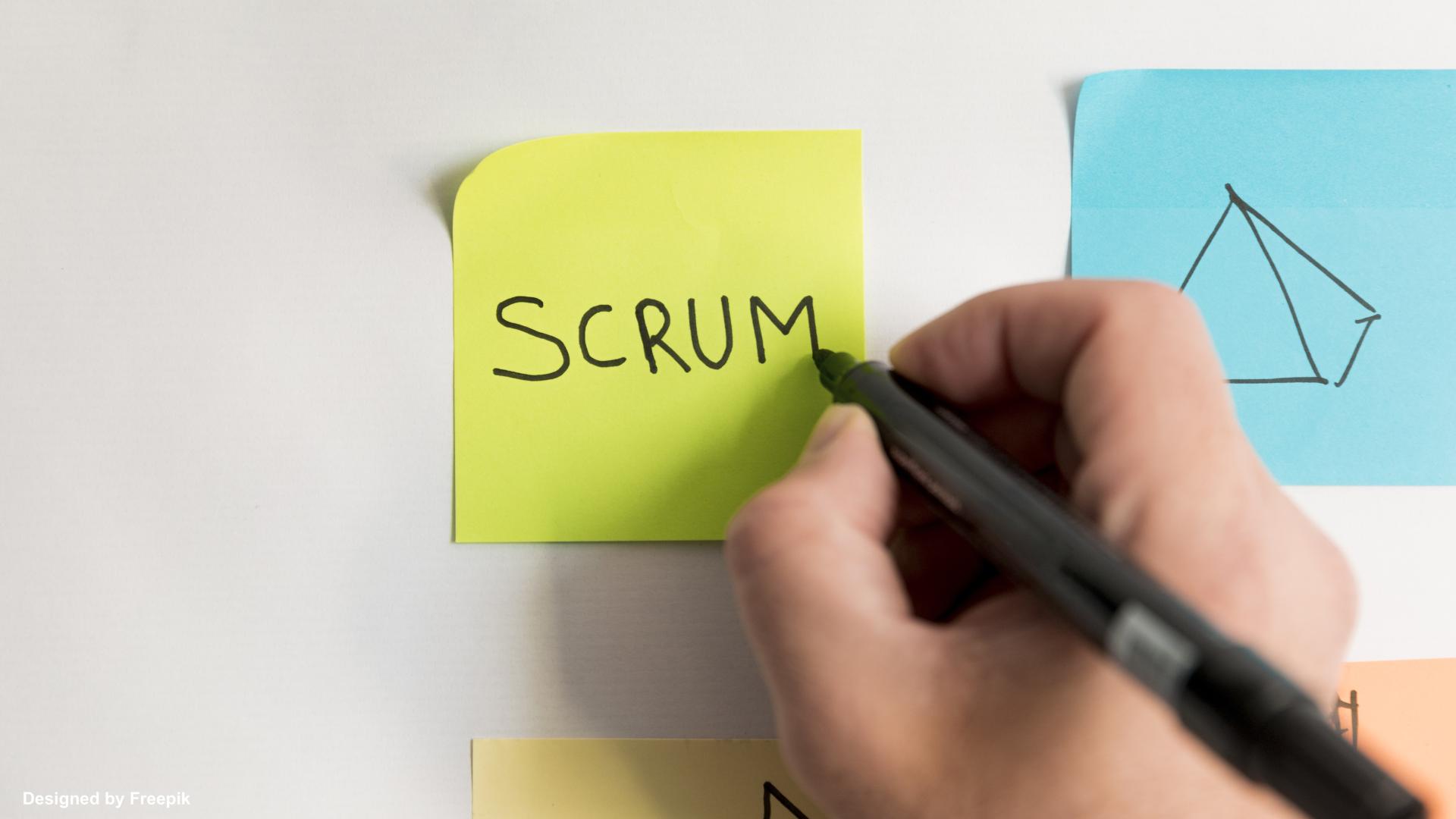
Scrum Masters and Agile Coaches can influence team creativity directly, using a range of tools aimed at stimulating creative thinking, such as organizing brainstorming sessions, facilitating design thinking workshops, or simply inspiring team members to be creative. However, the most interesting and most consequential impact on creativity occurs indirectly, through everyday practices that are not explicitly designed to foster it. These activities are key because they shape the underlying conditions that enable and foster creative thinking at the team level.
First, these include swarming collaboration, a form of teamwork that encourages debate, perspective-taking, and generative – creatively productive – interactions. Scrum Masters and Agile Coaches help teams operate in a state of a dynamic balance, “on the edge of chaos,” integrating enough stability to function effectively with enough openness to question existing assumptions about ways of working and the product being developed. This, in turn, allows teams to explore alternative work practices, development approaches, and product features. In practice, this means strengthening communication within the team as well as between the development team and the Product Owner, maintaining a sense of team support, and shielding the team from organizational pressures that could undermine creative engagement.
The second type of activities fosters continuous improvement. Scrum Masters and Agile Coaches improve the efficiency and the quality of teams’ daily work by helping them improve their work processes, make realistic work plans, and maintain a sustainable pace. By doing so, they free up time and energy that can be directed towards reflection, exploration of different ideas, and experimentation, activities essential for creative thinking.
Activities of the third type embrace complexity, uncertainty, and change, which are inherent features of agile work. Scrum Masters and Agile Coaches teach their teams the principles of self-organization and ensure transparency in work, progress evaluation, identification of problems, and decision-making. They introduce teams to empirical process control – an exploration-oriented approach in which successive iterations are treated as experiments designed to test hypotheses about the product and its development process. In turn, this strengthens the team’s adaptive capacities and openness to change. In this sense, Scrum Masters and Agile Coaches often act as change agents, questioning deep-rooted patterns and deliberately disrupting team homeostasis, that is a state of dynamic stability, in order to stimulate problem-finding and generative search in the team.
However, the efficacy of this pro-creative potential largely depends on organizational support, in particular on the degree of structural empowerment granted to Scrum Masters and Agile Coaches. Structural empowerment is a combination of formal and informal positioning within the hierarchy of an organization, as well as real-life authority.
In many organizations, Scrum Masters and Agile Coaches occupy relatively low-ranking positions – in some cases below Product Owners – which can significantly curb their ability to raise creativity in teams. When Scrum Masters and Agile Coaches are not sufficiently empowered, do not have enough organizational backing and capacity to act meaningfully, their impact is drastically limited. Interviewees describe this as being “surrounded by concrete walls.”
Over time, this leads to frustration and withdrawal, with much of their creative potential underutilized. What this means is that simply hiring a Scrum Master or Agile Coach is not enough: organizations must actively support people in these roles and provide structural empowerment for their input to bring fruit.
Lastly, my findings point at the importance of generative spaces fostering creativity. They are a time–space nexus of sorts, spanning the physical, virtual, and mental dimensions of teamwork. While such spaces are not enough to guarantee creativity, they significantly increase the likelihood that novel ideas and solutions will emerge within agile teams — much like the size of a goldfish is shaped by the bowl it lives in.
The role of Scrum Masters and Agile Coaches is often underestimated and, at times, marginalized. This study shows that their influence on agile teams is broader than commonly assumed, and that organizations employing Scrum Masters and Agile Coaches may benefit not only from increased team productivity but also from enhanced team creativity. Whether this potential is fulfilled depends largely on the organization itself and on managers’ willingness to provide the structural support and empowerment required for people in these roles to make a meaningful difference.
___
The research article is available in Creativity and Innovation Management: https://onlinelibrary.wiley.com/doi/10.1111/caim.70038


