Oxford debate AI in medicine: future or inflated expectations?

Oxford debate
AI in medicine: future or inflated expectations?
In the face of the rapid advancement of technology and the growing role of Artificial Intelligence, medicine is confronted with significant challenges and opportunities. During the debate, which will take place on April 4th, 2025, we will discuss the current state of AI applications in medical sciences and its impact on clinical practice, analyzing both the benefits and the potential risks associated with its implementation in healthcare. The debate is organized by: Kozminski University, Pomeranian Medical University in Szczecin, Kozminski Health, We are Clinical Research, and the Kozminski University Debate Club.
What is an Oxford debate?
An Oxford debate is a formalized form of discussion originating from the most esteemed British universities. It emphasizes problem analysis, logical arguments, and the art of refined speech. Two four-member teams – the Proposition and the Opposition – debate a pre-defined motion. Each speaker has 5 minutes to deliver their speech, with the first and last 30 seconds being “protected.” The roles of the speakers are clearly defined:
- the first introduces the debate,
- the second develops the arguments,
- the third refutes the opponent's position,
- the fourth summarizes.
The debate requires meticulous preparation, formal addresses to the jury, and adherence to time limits. Both the content and the delivery matter, allowing participants to influence the audience and the judges effectively.

Debate themes
Artificial Intelligence is already revolutionizing diagnostics, therapy, and the management of healthcare systems, offering solutions that can significantly enhance the efficiency and accessibility of medical services. The introduction of AI in medicine enables
- faster analysis of large datasets,
- precise prediction of treatment outcomes,
- the personalization of therapies tailored to individual patient needs.
However, these promising innovations come with numerous ethical, legal, and technological challenges that require deeper understanding and analysis.
The debate will be an excellent opportunity to delve into these topics, exchange opinions, and understand various perspectives on the future of AI in medicine. It will aim to address the question: Is the use of Artificial Intelligence in medicine truly a step forward that will bring significant benefits to healthcare systems and patients, or does it carry risks that outweigh the potential gains?

Registration for the Event
Debate schedule
14:00 – 14:20 Registration of Participants
14:20 – 14:40Introduction
Official welcome of guests Presentation of the debate sections and their activities Introduction to the format of the Oxford-style debate
14:40 – 16:00 Debate
16:00 – 16:20 Jury Deliberation and Audience Voting
16:20 – 16:30 Announcement of Results and Award Ceremony
Justification of the Jury’s decision Presentation of the Jury Award and Audience Choice Award
16:30 – 16:50 Audience Discussion
16:50 Conclusion of the Debate
Summary and closing of the event Group photo of all participants and organizers

Debate members
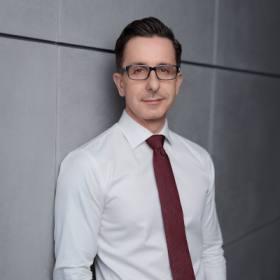
Dr Tomasz K Wojdacz is a professor at Pomeranian Medical University in Szczecin, where he currently leads a research team engaged in research in the field of clinical epigenetics. The professor's professional experience includes not only scientific research, but also entrepreneurship and the commercialization of research results. He is the founder and CEO of Danish company MethylDetect ApS and Polish EPI-CAN Technologies sp. z.o.o., both commercializing intellectual properties originating from his research. Professor Wojdacz is an internationally recognized expert in epigenetic research and began his scientific work before his doctoral studies at the Peter MacCallum Cancer Center in Australia. After obtaining his doctorate, he conducted research at such centers as the Karolinska Institute in Sweden and the Aarhus Institute of Advanced Studies in Denmark, where he received a Marie Skłodowska-Curie Individual Fellowship. Professor Wojdacz is also the president of the International Society of Molecular and Clinical Epienetics and a graduate of Kozminski University, MBA.

Łukasz Więch is an experienced public health practitioner with more than 15 years of experience in clinical research and extensive expertise in health care management. His professional interests include change management, management education, organizational development and ethics in clinical research.
He currently serves as Medical Director at Accelerated Enrollment Solutions, where he is responsible for the development of the organization's clinical team in Poland and the quality of ongoing research at Synexus sites. He is also a leader of health studies at Kozminski University, where he has educated more than 2,000 graduates over the years, developing their competencies in health care management and clinical research.
As a certified trainer of the advanced simulation game SysTeamsChange®, he supports managers and organizations in developing practical change management skills, particularly in the healthcare sector. He also conducts scientific research on the use of simulation games as educational tools in management processes, combining theory and practice and setting new directions in the field.
He is vice-chairman of the Council of the Health Policy Institute, actively working to shape health policy and innovation in health care.
He believes that the future of the health care system is based on education, innovation and collaboration. Working at the intersection of science, business and clinical practice, he consistently strives to create value for patients, professionals and organizations.
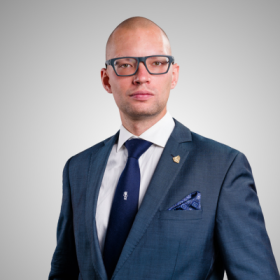
Marshal
A student of Kozminski University, actively involved in creating developmental opportunities for fellow students. A social activist. Runner and marathon enthusiast. Represented Kozminski University in floorball at the Academic Polish Championships. For the past two years, has been administratively supporting the Kozminski University Debate Club, promoting Oxford-style debates as a discussion format. In 2023 and 2024, he received the IMPACT scholarship awarded by the Koźmiński Foundation for outstanding organizational and social achievements. In 2023, together with his team, he advanced to the final stage of the Academic Polish Oxford Debate Championships.

Chairwoman of the Adjudication Panel
She is a second-year bachelor's student in Management. For three years, she has been actively engaged in Oxford debates and has been a member of the Kozminski Academy Debate Club for a year. Beyond her passion for debating, she is interested in various forms of art, including film and acting, as well as sailing. Since starting her studies, she has also been developing her interests in event organization and project management. In 2024, together with her team, she advanced to the final stage of the Academic Polish Oxford Debate Championships.
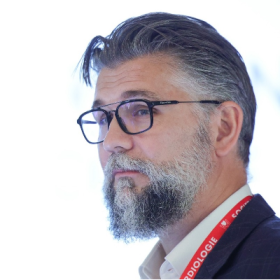
Prof. Maciej Banach was an Undersecretary of State at the Ministry of Science and Higher Education of the Republic of Poland (2010-2012), and a President of the 2nd largest hospital in Poland. - the Polish Mother's Memorial Hospital - Research Institute (PMMHRI) (2014-2021). He is a Head of Cardiovascular Research Centre at University of Zielona Gora, Head of Department of Preventive Cardiology and Lipidology at the Medical University of Lodz (MUL), and Professor Consultant at the Department of Cardiology and Congenital Diseases of Adults at the PMMHRI in Lodz, Poland. Since October 2022 he has also joined the Faculty of the Johns Hopkins Ciccarone Center for the Prevention of Cardiovascular Disease as an Adjunct Professor (the Johns Hopkins Hospital is ranked as the 4th in the World's Best Hospitals 2023 by Newsweek).
He is a Secretary of the European Atherosclerosis Society (EAS) (2021-2024) and member of the Scientific and Health Policy Advisory Group of the FH Europe. He is a Founder and Head of the Polish Lipid Association (PoLA) (2011-), Founder of the Lipid and Blood Pressure Meta-analysis Collaboration (LBPMC) Group (2012-; www.lbpmcgroup.com) – a group of over 150 worldwide experts aimed to investigate the most important issues in the field of lipid disorders, hypertension, nutrition and cardiovascular risk, as well as the International Lipid Expert Panel (ILEP; https://ilep.eu) (2015-), which has been founded to prepare recommendations in the area of preventive cardiology in the most debatable issues that have not been covered in the existing guidelines. He is also a member of the REPROGRAM Consortium – a group of experts challenging with Covid-19 pandemic, CArdiometabolic Panel of International Experts on Syndemic COVID-19 (CAPISCO), ORCHESTRA Project – EU project dedicated to long-Covid research, and member of 2 largest worldwide databases – the Global Burden of Disease (GDB) (University of Washington, Seattle, US) and Non-Communicable Diseases Risk Factor Collaboration (NCD-RisC, Imperial College of London, UK). He is also Founder and President of the foundation – Think-Tank “Innovation for Health”, which gathers six main health research institutes and over 40 medical business representatives in Poland with main aim to make innovations in the medical area in Poland. He is a Visiting Professor of University of Alabama at Birmingham (UAB) and University of Medicine and Pharmacy Victor Babes in Timisoara, Romania, and University of California at Irvine (UCI).
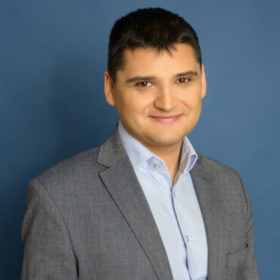
PhD Tomasz Jetka specializes in the application of computational methods and artificial intelligence (AI) to drug discovery and medicine, currently heading Ardigen's Data Science and AI offerings. Over the past decade, he has worked closely with pharmaceutical and biotechnology companies on identifying disease mechanisms, clinical programs and collaboration between experimental and computational teams. He holds a degree in applied mathematics from the University of Warsaw, and a PhD from the Polish Academy of Sciences (IBIB Institute of the Polish Academy of Sciences).
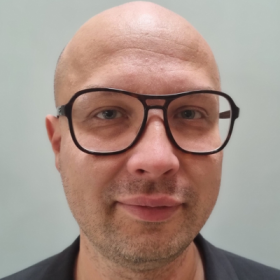
Business Development Manager for the Healthcare Sector in the EMEA Region at Amazon Web Services (AWS)**, combines expertise in leveraging clinical and omics data with driving innovation in healthcare. At AWS, he supports medical organizations in utilizing cloud technologies, including AI, with a focus on advancing personalized medicine.
Previously, he led the genomic platform at the Berlin Institute of Health at Charité - Universitätsmedizin Berlin, managing projects in oncology and rare diseases. Under his leadership, the molecular genetics unit was established at Europe’s largest hospital-based laboratory, Labor Berlin (a joint venture between Charité and Vivantes). Earlier in his career, he conducted research in human genetics at the Max Planck Institute for Molecular Genetics.
By combining medical knowledge with business skills, Dr. Żemojtel advocates for harnessing the computational power of the cloud to unlock the potential of large clinical datasets, driving the development of personalized therapies and integrated healthcare solutions.
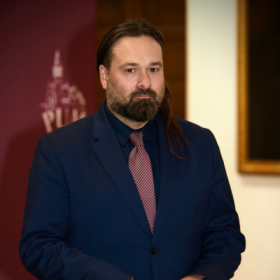
Dr. habil. in Medical Sciences, Andrzej Ossowski, professor PUM, by education, a biologist and forensic scientist professionally involved in forensic genetics, clinical genetics, forensic anthropology, and criminalistics. A graduate of the Faculty of Natural Sciences and the Faculty of Law and Administration at the University of Szczecin, as well as a doctoral program at the Pomeranian Medical University in Szczecin. He began his professional career in 2002 at the Department of Forensic Medicine of PUM in Szczecin.
Currently, Vice-Rector for Medical Technologies at the Pomeranian Medical University in Szczecin, Head of the Department of Forensic Medicine and the Department of Genomics and Forensic Genetics at PUM, as well as Director of the Regional Center for Digital Medicine at PUM.
Author and co-author of several dozen scientific articles. He has issued over 3,000 forensic expert reports in the fields of forensic genetics, forensic medicine, forensic anthropology, and criminalistics.
The originator and creator of the Polish Genetic Database of Totalitarianism Victims, a project that restores the identities of victims of totalitarian crimes. Through this initiative, he has led to the identification of over 150 victims of both communist and Nazi crimes.
As part of his work, he has contributed to locating approximately 20,000 victims of World War II and the post-war period across Europe and has successfully identified over 1,000 victims.
In 2023, he led the first scientific research mission in years to Ukraine, searching for victims of the Volhynian massacre. After four months of investigations, the mission resulted in the discovery of a mass grave.
Awarded the Knight's Cross of the Order of Polonia Restituta for outstanding contributions to restoring the memory of the victims of totalitarian crimes.
In his scientific work, he participates in projects in the fields of forensic genetics, clinical genetics, forensic anthropology, archaeology, criminalistics, and history.
A regionalist actively engaged in numerous local projects aimed at strengthening the identity of Western Pomerania.
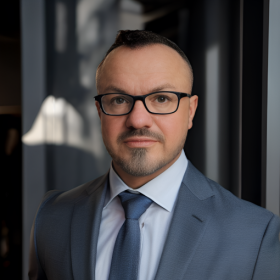
Director at the Medical Research Agency, expert at OPI PIB's Center for Digital Medicine Innovation. An expert in medical technology and digital healthcare, he is currently pursuing a PhD on human-robot interaction.
He has more than 20 years of experience in digital transformation and implementation of modern technologies. He has held key leadership roles at Microsoft, Oracle, HPE and Dell, where he implemented innovative solutions based on artificial intelligence, cloud and data, transforming key applications for the public sector.
He is a co-founder of the Warsaw Health Innovation Hub and an active advisor on e-health and artificial intelligence policy development in Poland. He lectures at a number of prestigious universities, including Leon Kozminski Academy, WSB Academy, Warsaw University of Technology, Cracow University of Economics and the National School of Public Administration.
He completed postgraduate studies at Warsaw Medical University, Massachusetts Institute of Technology and Harvard University. He is an IEEE CertifAIEd Authorized Assessor of artificial intelligence.
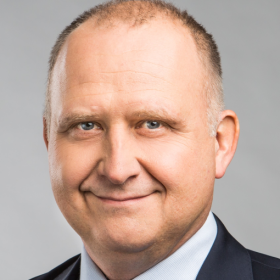
Pełnomocnik Zarządu ds. Medycyny Laboratoryjnej, Diagnostyka SA.
Lekarz i diagnosta laboratoryjny; internista, specjalista diagnostyki laboratoryjnej i zdrowia publicznego.
Od prawie trzydziestu lat związany zawodowo w medycyną laboratoryjną.
Autor kilkudziesięciu publikacji naukowych i poglądowych. Autor i współautor podręczników i skryptów uczelnianych z zakresu medycyny laboratoryjnej. Wykładowca akademicki współpracującymi z kilkoma wyższymi uczelniami medycznymi w kraju w ramach szkoleń przed- i podyplomowych.
Certyfikowany audytor systemów zarządzania EN ISO 9001, 15189 i 17025.
Multimedalista mistrzostw Polski lekarzy w szachach szybkich i błyskawicznych.
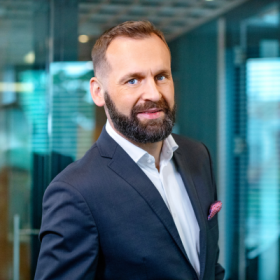
PharmD Łukasz Izbicki, entrepreneur, CEO of CTIN and Leki.pl. He specializes in analyzing the behavior of patients who actively seek information online about available therapies and research. He develops innovative platforms that, through advanced SEO algorithms and AI technologies, effectively reach these patients, enabling them to quickly access reliable information about available treatments.
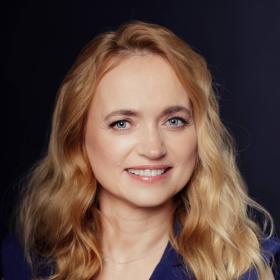
The President of the Management Board of Szpitale Pomorskie Sp. z o.o. in Gdynia. She is a lawyer with managerial experience in overseeing large medical institutions and possesses strong negotiation skills, enabling him to reach agreements on both social and institutional levels.
A doctoral student at the Faculty of Management (Department of Econometrics) at the University of Gdańsk. A graduate of the MBA for Medical Staff program at Kozminski University and the Advanced Management Program at Kozminski University. She has completed a first-degree music school in piano, a legal counsel apprenticeship, a Real Estate Valuation Program, a Pedagogical Studies Program, a European Law Studies Program, and a Supervisory Board Course.
Between 2006 and 2020, she restructured, transformed, and debt-relieved approximately 30 hospitals across Poland. Since 2017, she has been a board member and the President of Szpitale Pomorskie Sp. z o.o.
She restructured four hospitals (in Wejherowo, Gdańsk, and two in Gdynia), first transforming them into commercial law companies and then consolidating them into a single, cohesively operating entity. When she started working at Szpitale Pomorskie in 2017, the company was operating at a loss of 9 million PLN. Thanks to her management decisions, 2023 ended with a gross profit of 70 million PLN, along with significant improvements in investments and service delivery.
She has over 15 years of experience as a local government employee in managerial positions, initially at the county level as the Secretary of Malbork County and later at the regional level as the Director of the Health Department at the Marshal's Office of the Pomeranian Voivodeship. As part of her responsibilities, she was responsible for overseeing medical entities established by local government authorities.
Previously, she worked at a Legal Counsel’s Office specializing in advising on the transformation and restructuring of hospitals. Her work included participation in the government program "Support for Local Government Units in Actions Stabilizing the Healthcare System" (known as Plan "B") as well as in the process of obtaining support from the Ministry of Health under Plan "C".
As a result of her initiatives, the number of healthcare entities in the region was reduced from 26 in 2011 to 12 in 2017. This optimization enabled improvements in investment and procurement processes, as well as more efficient management of scarce medical staff resources. Consequently, all the healthcare entities she restructured achieved positive financial results in 2021, placing the Pomeranian Voivodeship first in the country in terms of hospital financial stability.
Due to her exceptional experience in healthcare management, she shares her expertise as a lecturer-practitioner in MBA programs for medical professionals at Kozminski University, Lazarski University, the University of Economics and Human Sciences, and the Medical University of Bialystok. She also conducts training sessions and speaks at conferences. Her lecture topics include healthcare entity restructuring, the role of local governments in the healthcare system, change management, and crisis management.
A passionate dragon boat enthusiast and winner of the Koźmiński Lions Award in the Manager category.
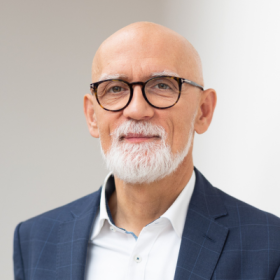
Director of the Institute of Mother and Child. Professionally: gynecologist, obstetrician, perinatologist.
Author of numerous scientific publications, books, and articles in the fields of obstetrics and gynecology, perinatology, public health, and technological innovations in medicine. Engaged in teaching activities through courses at the Medical Centre of Postgraduate Education, the Faculty of Medicine at Lazarski University, and scientific and training conferences.
Actively involved in the use of innovative methods in patient care and treatment. Advocate of clinical-technological collaboration – established the first Department of AI and Technological Innovations in a public research institution operating within the healthcare system in Poland. The department's activities include, among others, the Mother and Child Startup Challenge competition. Leader of the working group on hospital innovations at NIL IN – the Network of Physician Innovators.
Member of the Polish Society of Gynecologists and Obstetricians, the Polish Society of Perinatal Medicine, the Government Population Council, and an elector of the Main Council of Research Institutes. Also, a member of the Expert Council of the Patient Ombudsman and the team for hospital management operating within the Council. As a member of the team of experts at the State Agency for the Prevention of Alcohol-Related Problems (PARPA), he participated in developing the recommendations on FAS (published in 2020). Currently, he is a member of the Expert Team on FASD at the National Centre for Addiction Prevention.
Acting in the interest of patients and their safety, he is also a member of the Committee for Benefits from the Medical Events Compensation Fund, established by the Patient Ombudsman.
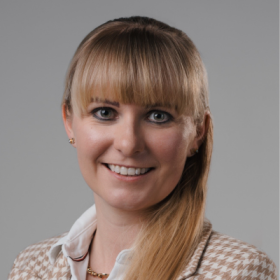
Professor at AGH University of Science and Technology, Director of the Center of Excellence in Artificial Intelligence at AGH University of Science and Technology in Kraków. Prof. Jaworek is the coordinator of the ARTIQ AI Center project, funded by the National Science Centre (NCN) and the National Centre for Research and Development (NCBR). She is an expert at the Confederation of Laboratories for Artificial Intelligence Research in Europe (CLAIRE) and a graduate of the TOP 500 Innovators program at Stanford University, USA. She has coordinated national (NCN, NCBR) and international research projects within programs such as EPSRC, FAST Healthcare Network Plus, DAAD, the National Institutes of Health, as well as NAWA Spinaker and NAWA Bekker. Prof. Jaworek received the NAWA Bekker Fellowship to conduct research at Stanford University, CA, USA.
Her main research interests focus on artificial intelligence, particularly in the areas of deep learning, anomaly detection, clustering, and the interpretability and explainability of AI solutions. Prof. Jaworek was awarded an Honorable Mention Award at CVPR'19 (ISIC Workshop), the Ministry of Science and Higher Education Scholarship for Outstanding Young Scientists (2017-2020), and the AGH Rector’s Individual Award for the Best Publishing Scientists (2017-2023).

Moderator dyskusji z publicznością
Kierownik komunikacji i PR w Międzynarodowym Towarzystwie Epigenetyki Molekularnej i Klinicznej.
Sponsor debaty

Media Patron

Honorary Patron


