Forging Global Health Security: Analysis of the WHO Pandemic Agreement and Its Negotiation Process

Forging Global Health Security
Analysis of the WHO Pandemic Agreement and Its Negotiation Process


The COVID-19 pandemic brutally exposed the weaknesses of the global public health system. A lack of coordination, unequal access to vaccines and ventilators, and political divisions led humanity to pay a huge human, social, and economic price. In response to this crisis, the international community, under the auspices of the World Health Organization (WHO), undertook a historic negotiation effort that concluded in May 2025 with the adoption of the so-called Pandemic Agreementt. However, will this document truly secure us against future threats?
The proposed research project aims to provide an in-depth answer to this question, analyzing not only the final text of the agreement but also the tumultuous process of its creation. The main goal of the project is to examine how ambitious promises of reform transformed into the final, often compromised, legal text. I intend to trace the evolution of the provisions from the first drafts (the so-called “Zero Draft”) in 2023 up to the version adopted two years later. A key question is: why and under what circumstances were hard legal commitments (where states “must” act) replaced in many places by soft declarations of intent or phrases such as “where possible”?
The negotiations revealed a deep division between wealthy nations (the Global North), primarily concerned with quick access to data on new pathogens (biosecurity), and developing countries (the Global South), which demanded guarantees of equitable access to medicines and technologies. The project posits that the Pandemic Treaty is a hybrid instrument, combining binding legal norms with aspirational language. This “constructive ambiguity” was the price for achieving global consensus but may pose a threat to the agreement's effectiveness in its hour of trial. The research aims to clarify whether these diplomatic evasions will not render international law powerless once again in the face of the next pandemic.
New law does not arise in a vacuum. The project will analyze how the Pandemic Agreement harmonizes with other, already existing legal regimes. Potentially, there is a risk of collision of norms here. On the one hand, we have the new Treaty, which treats pathogens as a common good requiring rapid sharing. On the other hand, the Nagoya Protocol is in force, which recognizes genetic resources as the sovereign property of states and requires complex consent for their export. An additional challenge is posed by intellectual property rights (patents) protected by the World Trade Organization (WTO), which often contradict the postulates for free access to life-saving medicines. The research is intended to show whether the new system will create legal chaos that will delay rather than accelerate the response to a threat.
To achieve these goals, the project goes beyond mere text analysis. In the course of the research, I plan to apply the “process tracing” method, novel in law but typical for political science. This will allow for the identification of turning points in the negotiations and an understanding of the political pressures behind specific changes in the provisions. The analysis of documents will be supplemented by interviews with WHO officials and negotiators, allowing a look behind the scenes of the diplomatic game played in Geneva.
The results of this project are not just academic theory. The Pandemic Agreement is an attempt to create an “insurance policy” for the world. Understanding its legal mechanisms, loopholes, and hidden compromises is crucial so that we, as humanity, do not repeat the mistakes of 2020-2022. This research will show whether we have created a real tool for global health protection or merely a paper tiger.
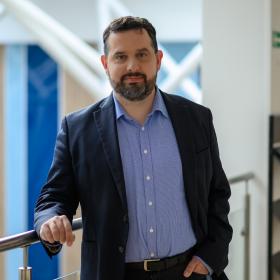
Professor, Head of the Department of International Law and EU Law at Kozminski University, attorney-at-law, and specialist in international economic law and international public health law.
He obtained his PhD from the European University Institute in Florence and his habilitation (DSc) from the Institute of Law Studies of the Polish Academy of Sciences (PAN). In 2025, he received the title of Full Professor. He has completed numerous international research fellowships, including at the University of Cambridge, the University of Michigan, Péter Pázmány Catholic University, and the National University of Public Service. He is a winner of six National Science Centre competitions and currently supervises a research project under the Preludium Bis program. He cooperates on a permanent basis with the Institute for Legal Studies within the Centre for Social Sciences at ELTE in Budapest.
He holds a number of prestigious expert and international functions, including: member of the Legal Advisory Committee to the Minister of Foreign Affairs, EU arbitrator for Trade and Sustainable Development (TSD) in trade disputes conducted under bilateral free trade agreements, representative of Poland in the High Council of the European University Institute, and member of the ILA Committee on International Law and Public Health.
He is the author of numerous monographs, including those published by Oxford University Press, and articles in leading international scientific journals. He is the co-author (with M. Menkes) of the only textbook on international economic law available on the Polish market. He also serves as the Managing Editor of the English-language annual Polish Yearbook of International Law.